Why anonymous sign-ups matter
Every time you sign up for a website with your real email address, you create a permanent, searchable record of that interaction. The website stores your address in a database. That database may be sold to data brokers, exposed in a breach, or used to build a marketing profile of you that follows you across the internet for years.
Data brokers are companies that aggregate information from thousands of sources — sign-up forms, public records, purchase histories, social media profiles — and sell it to advertisers, employers, insurers, and anyone else willing to pay. Your email address is the central linking key that connects your activity across different services. Every time you use it on a new site, you expand the picture these companies hold about you.
The simplest way to interrupt this process is to not hand over your real address in the first place. Anonymous sign-ups — using a temporary email address instead of your real one — protect you from the moment of registration. The website never has your real address, so it cannot sell it, leak it, or use it to build a profile of you.
What you need before you start
The only tool you need is access to My Temp Mail — which works in any browser, on any device, with no installation and no account required. The process takes no longer than using your real email address.
It helps to have My Temp Mail open in one browser tab and the sign-up form in another. This way you can copy the temporary address, switch tabs to paste it into the form, then switch back to Temp Mail to receive and act on any verification email.
Step-by-step: how to register anonymously on any website
Step 1: Generate a temporary email address
Open My Temp Mail and click Generate (or it may auto-generate on load). Within one second, you have a working inbox at a real email address on one of several owned domains. The address is displayed prominently — click the copy icon next to it to copy it to your clipboard. You do not need to remember it; it is in your clipboard and visible in the tab.
Step 2: Choose your domain if needed
My Temp Mail offers multiple domains via a dropdown selector. The default domain works for most websites, but if a site rejects it with a message like "please use a real email address" or "this email domain is not accepted," try a different domain from the dropdown. Each domain works identically — the inbox is the same, just the @domain part changes. Most website blocklists cannot keep pace with all available domains.
Step 3: Paste the address into the sign-up form
Switch to the tab with the website's sign-up form and paste your temporary address into the email field. Fill in any other required fields normally (username, password, etc.) and submit the form. Most websites cannot distinguish between a temporary address and a real one — both are syntactically valid email addresses that follow standard format rules and pass basic format validation.
Step 4: Verify your email address
If the website sends a verification email — which most do — switch back to your Temp Mail tab. The verification email typically arrives within 5–15 seconds. Open it, click the verification link inside, and your account on the website is confirmed. The link opens in a new tab; once clicked, you can close it and return to what you were doing.
Some websites send a numeric OTP code instead of a link. The process is the same: switch to Temp Mail, find the code in the email, type it into the website's form.
Step 5: Use the service as needed
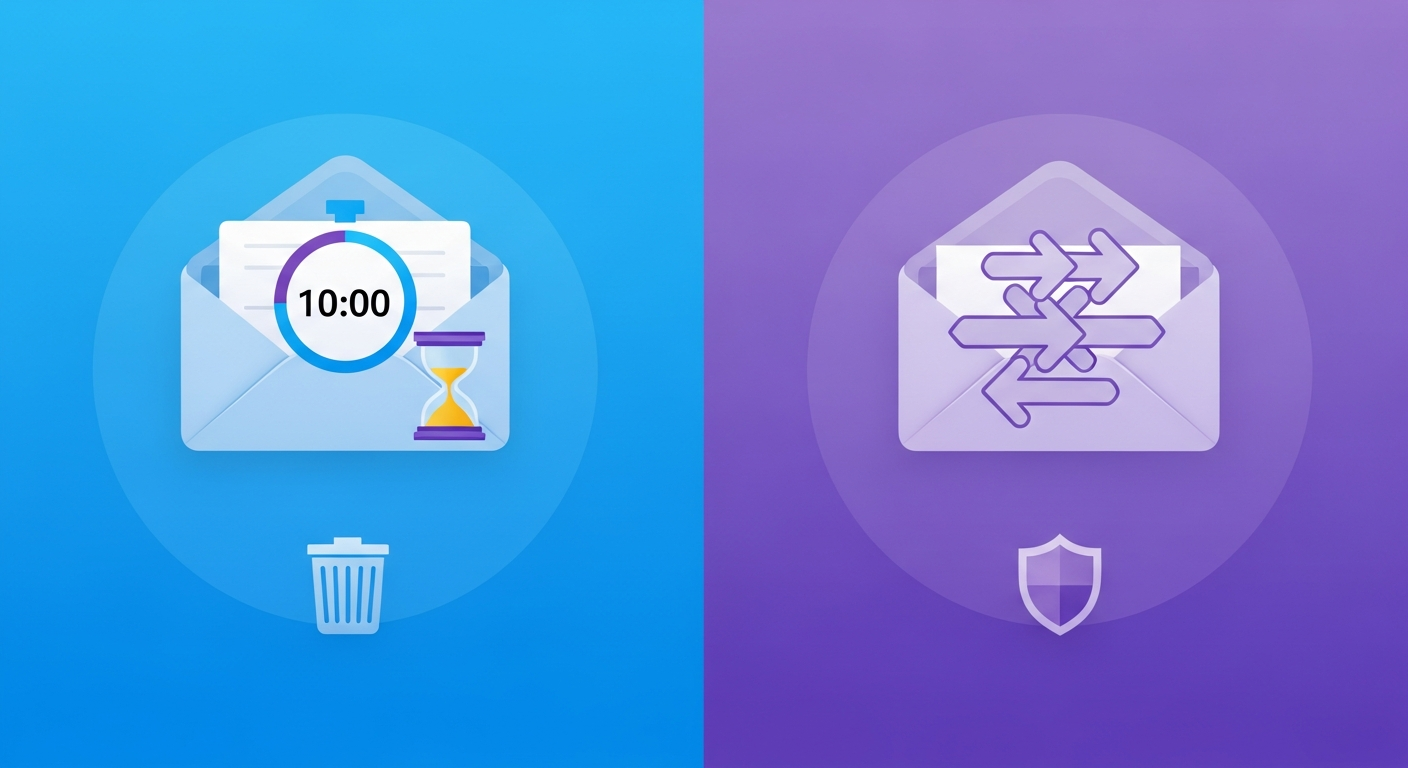
Once verified, continue using the website normally. If the site sends further emails during your current session — a welcome email, a receipt, a confirmation — they will arrive in your Temp Mail inbox for as long as the address remains active. The address lifespan is displayed in the Temp Mail interface; typically 10 minutes to several hours depending on the service settings.
Step 6: Let the address expire naturally
When the address expires, no action is required from you. The inbox disappears, every message in it is permanently deleted, and any future email sent to that address will bounce at the server level. You are done — with no lasting trace of the registration linked to your real identity.
What to do when sites block disposable emails
An increasing number of websites — particularly those with paid subscription tiers they want to protect from free trial abuse — maintain lists of known disposable email domains and reject them at the point of registration. If you encounter this, you have several options:
- Try a different domain: Open the domain selector in My Temp Mail and switch to a different domain. Generate a new address on the new domain. Many blocklists are maintained manually and cannot keep current with all available temporary email domains, so a less common domain often works where a well-known one does not.
- Use an email alias: Services like SimpleLogin or addy.io create forwarding addresses that are harder to identify as disposable because they use less well-known domains. These are worth keeping as a backup for websites with more aggressive detection.
- Use your secondary inbox: If both of the above fail, fall back to a dedicated secondary Gmail or Outlook account you use for commercial sign-ups. This is not as private as a temporary address, but it keeps your primary inbox clean.
Staying safe with anonymous sign-ups
A temporary email address protects your real identity at the point of sign-up, but a few additional habits make anonymous registrations genuinely secure:
- Use a unique password for each account. A password manager like Bitwarden makes this practical. If the website is eventually breached and the password list is stolen, reused passwords allow attackers to access your other accounts — but a unique password limits the damage to that one site.
- Do not enter your real name if the service does not require it. Many websites ask for a name but do not verify it. Using a pseudonym further reduces the amount of identifying information the site holds about you.
- Be cautious about payment details. Anonymous sign-ups protect your email address, not your payment information. If you add a credit card to an account registered with a temporary email, the payment processor still knows who you are. For payment privacy, this is a separate problem requiring separate tools.
- Note the account details somewhere. If you create an account you may want to access again, record the temporary email address you used, the username, and the password in your password manager — even though the email inbox is gone, some websites allow you to log in with username and password without email verification every time.
When NOT to use anonymous sign-ups
Anonymous sign-ups are the right choice for throwaway interactions. They are the wrong choice — and can cause real problems — in these situations:
- Any account you need to keep long-term. When the temporary address expires, you lose the ability to reset your password via email. If you are locked out for any reason, there is no recovery path unless the website offers an alternative.
- Financial and banking services. These require ongoing, verified communication and use your email for security alerts and fraud notifications. Using a temporary address is a serious practical risk.
- Healthcare and government services. Medical correspondence, appointments, prescriptions, and official government communications need a permanently accessible email address.
- Your primary professional accounts. Work email, freelance platforms, job applications, and professional associations should always be linked to a permanent, recoverable address.
The decision rule is straightforward: the more important the account, the more important it is to use a permanent, recoverable email address. The less important — or the more uncertain you are about whether you will return — the more appropriate a temporary address becomes.